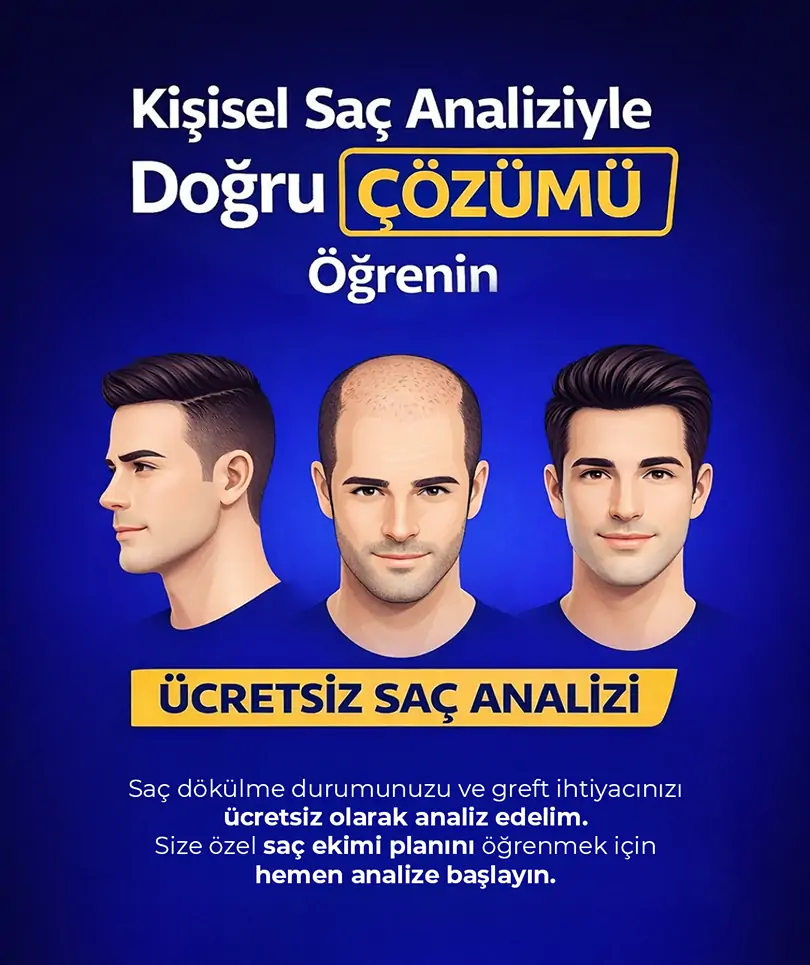





Hair Transplant
Natural Appearance, Lasting Results, and Safe Planning with Hair Transplantation
Hair loss gradually becomes not only an aesthetic change for many people, but also a condition that affects self-confidence and social life. Recession of the frontal hairline, opening at the temples, thinning in the crown area, or a general decrease in density can directly change a person’s facial expression, perceived age, and appearance in the mirror. Hair transplantation is now one of the most effective solutions for those who want to restore this change in a natural and permanent way.
As Elegance Clinic, we do not see hair transplantation as simply moving hair follicles from one area to another. For us, a successful hair transplant means achieving a balanced and natural-looking result that does not appear artificial from the outside, and that is planned in accordance with the individual’s facial structure, age, hair characteristics, level of hair loss, and expectations. For this reason, we adopt a personalized approach for every patient rather than applying a standard procedure.
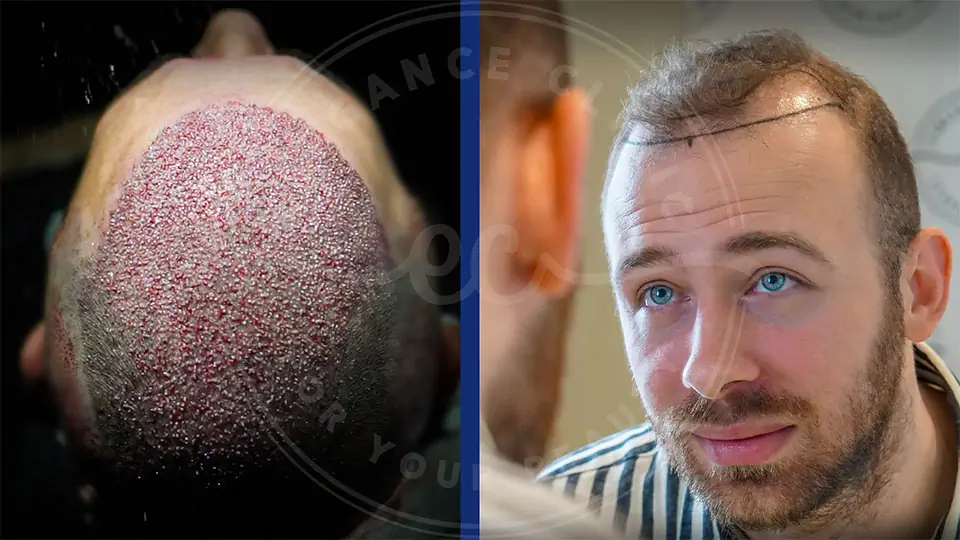
What Is Hair Transplantation?
Hair transplantation is the process of harvesting hair follicles, usually from the back of the scalp where they are more resistant to hair loss, and transplanting them into bald or thinning areas. Since the patient’s own hair follicles are used, the results are both natural and long-lasting. However, a successful hair transplant is not limited to simply relocating follicles. Hairline design, placing grafts at the correct angle, density distribution, and planning in harmony with the face are among the most important parts of the process.
For this reason, hair transplantation is not merely a procedure aimed at covering empty areas. It is also a comprehensive treatment that requires aesthetic planning, medical evaluation, and technical precision. When performed correctly, it enhances a person’s appearance; when planned incorrectly, it can create an artificial result. That is why planning and the experience of the team are just as important as the operation itself.
Why Does Hair Loss Occur?
Hair loss does not have a single cause. One of the most common reasons is genetic predisposition. In addition, stress, hormonal changes, age-related effects, nutritional imbalances, certain health conditions, and environmental factors can also lead to reduced hair density. In men, hair loss typically follows a pattern that progresses in the frontal hairline and crown area, while in women, general thinning and loss of volume are more common.
Since not all types of hair loss are evaluated in the same way, the type of hair loss, its progression level, and the donor area capacity should first be analyzed when planning a hair transplant. Proper planning should consider not only today’s appearance, but also the future structure of the hair.
Who Is a Suitable Candidate for Hair Transplantation?
Hair transplantation may not be suitable for everyone in the same way. When evaluating candidate suitability, both the pattern of hair loss and the adequacy of the donor area are taken into account. In general, people with the following characteristics may be suitable candidates for hair transplantation:
- Those who have a sufficient and healthy number of hair follicles in the donor area
- Those whose hair loss pattern has become clearly defined
- Those whose general health condition is suitable for the procedure
- Patients with realistic expectations who understand the process correctly
- Those for whom planning can be made for the frontal hairline, mid-scalp, or crown area
Every individual’s hair structure is different. In some people, frontal hairline design may be more of a priority, while in others, strengthening the crown area may be a more appropriate approach. For this reason, the most accurate decision is made after a specialist evaluation.
How Is Hair Transplantation Performed?
The hair transplantation process may appear to be a single-stage procedure, but it actually consists of several important interconnected stages. A successful outcome depends on careful planning at each of these stages.
Initial Analysis and Planning
In the first stage, the extent of hair loss, the strength of the donor area, the structure of the hair strands, the direction of the hair, and the patient’s expectations are evaluated. This analysis determines which technique will be more suitable and how the transplant area should be planned.
Frontal Hairline Design
At the core of a natural result lies the frontal hairline. If the line is planned too straight, too harsh, or in a way that is inconsistent with the facial structure, it may create an artificial appearance. Therefore, the hairline should be designed individually according to the person’s age, facial proportions, and hair characteristics.
Graft Harvesting
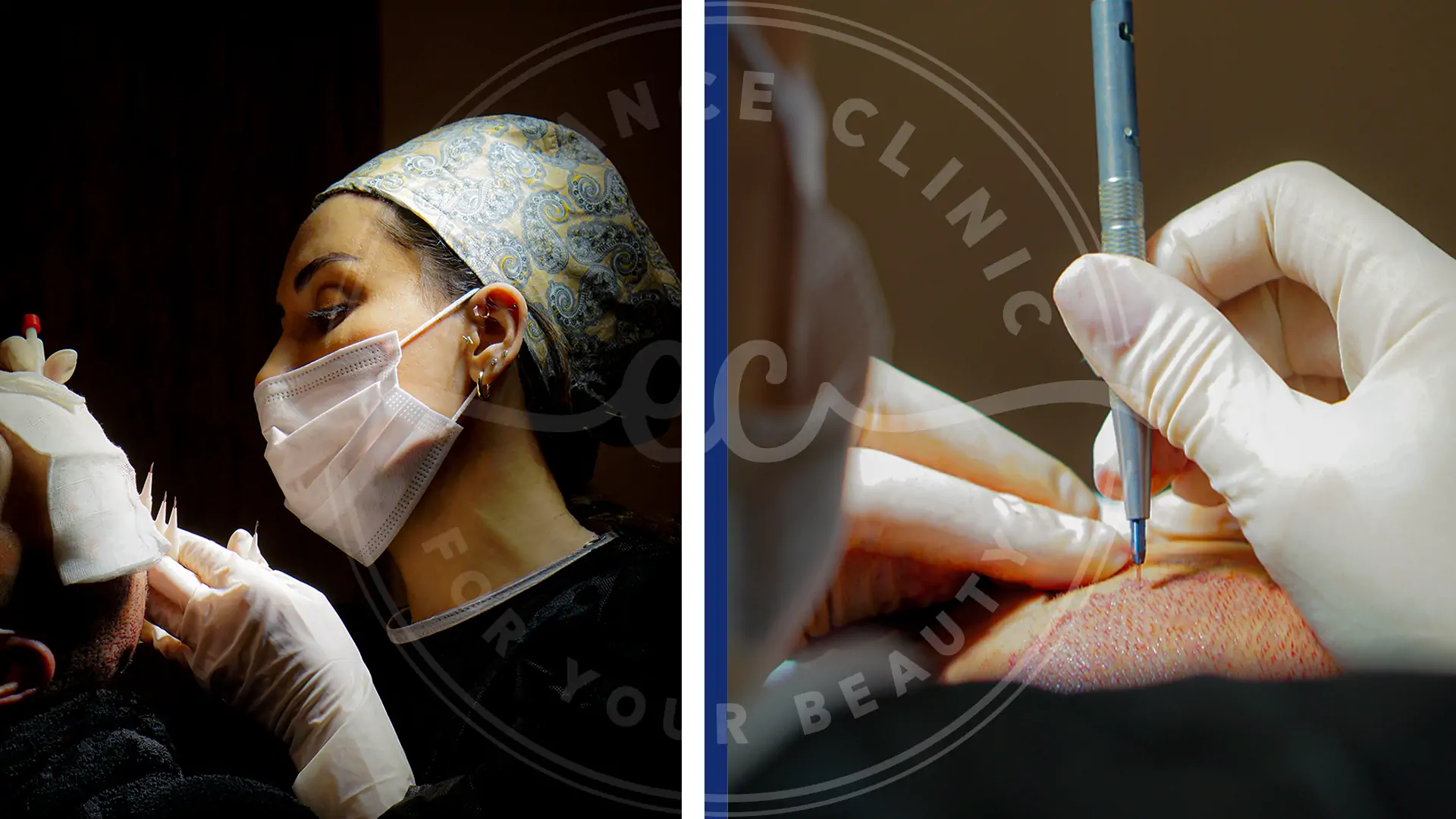
Healthy hair follicles are harvested one by one from the donor area using specialized equipment. The goal at this stage is to collect the follicles intact and use the donor area in a controlled manner. Proper management of the donor area is important both for the current procedure and for long-term hair planning.
Preparation of the Recipient Area
Depending on the technique used, the area where the hair follicles will be placed is prepared. The channel opening or direct implantation stage takes place here. In this part, the direction, angle, and density of the hair play a critical role in achieving a natural appearance.
Placement of the Grafts
The harvested grafts are placed into the transplant area according to the previously determined plan. The goal at this stage is not only to fill empty areas, but also to create a balanced appearance between the frontal area, mid-scalp, and crown.
Initial Care and Follow-Up
After the procedure, a personalized care process begins. Proper care in the first days helps the transplanted follicles settle in a healthy way. For this reason, success in hair transplantation is not limited to the day of the operation; the following period is at least as important as the procedure itself.
Methods Used in Hair Transplantation
There may not be one single correct method for every patient in hair transplantation. The most suitable technique should be determined according to the degree of baldness, hair structure, expectations, existing hair density, and the need to return to daily life. As Elegance Clinic, rather than adopting a one-size-fits-all approach in hair transplantation, we embrace a personalized technical planning approach.
FUE Hair Transplantation
The FUE method is based on harvesting hair follicles one by one from the donor area and transferring them to the recipient area. It is widely preferred in cases involving larger bald areas, natural density planning, and balanced distribution. FUE is one of the strongest methods forming the foundation of modern hair transplantation practices.
DHI Hair Transplantation
When a more controlled, dense, and precise placement is targeted in certain areas, DHI hair transplantation may stand out. Performed with special implanter pens, this method may offer advantages, especially in situations that require more controlled work between existing hairs.
Sapphire FUE Hair Transplantation
Sapphire FUE hair transplantation, in which sapphire blades are used during the channel opening stage, is one of the methods frequently considered in cases where precise channel planning and a natural appearance are targeted. It is an important option, especially for controlled results in hairline design and density transitions.
Unshaven Hair Transplantation
For suitable candidates who do not want to cut their hair completely short, unshaven hair transplantation may be considered. This method may offer advantages especially for people who want to continue their social life in a more controlled way. However, it is not suitable for everyone; suitability is determined according to the hair structure and the operation plan.
Differences Between FUE, DHI, and Sapphire FUE
| Feature | FUE | DHI | Sapphire FUE |
|---|---|---|---|
| Core Approach | Grafts are harvested and placed into the planned area | Grafts are placed in a more controlled manner with the help of a special pen | Applied with the FUE logic, with sapphire blades used during the channel stage |
| Main Advantage | Offers strong flexibility in planning larger areas | May provide an advantage in precise and dense placement targets | Supports a natural appearance with more controlled channel planning |
| Density Planning | Suitable for balanced and natural distribution | May allow more controlled placement between existing hairs | May offer precise work in hairline and transition areas |
| Who May It Be Suitable For? | Widely considered for different levels of hair loss | May stand out in candidates seeking thickening and controlled placement | May be preferred in planning focused on a natural hairline and aesthetic placement |
| Planning Structure | Focused on general transplantation and density distribution | Focused on more precise and direction-controlled placement | Focused on natural transitions and channel precision |
Which Hair Transplantation Method Is More Suitable?
In hair transplantation, the right technique is not determined only by which method is popular. The most suitable approach is selected according to the structure of the person’s hair strands, the width of the bald area, donor capacity, the need for thickening, and expectations about returning to daily life. In some candidates, DHI hair transplantation may be more advantageous, while in some patients, Sapphire FUE hair transplantation may provide a more appropriate result. In cases where shaving is an important issue, unshaven hair transplantation may also be considered.
That is why the right question should not be “Which is the best technique?” but rather “Which is the most suitable technique for me?” Because a successful result is not created by the name of the technique, but by the right candidate, the right planning, and the right application.
Can Hair Transplantation Be Performed in Women?
Yes, after a proper candidate evaluation, hair transplantation can also be successfully performed in women. In female-pattern hair loss, instead of completely bald areas like those often seen in men, general thinning and loss of density are more commonly observed. Therefore, planning also differs accordingly.
In female patients, hairline design, preservation of existing hair, and achieving a natural increase in density must be evaluated much more carefully. For more detailed information on this subject, you can review our hair transplantation in women page.
What Should Be Considered Before Hair Transplantation?
The preparation period before the procedure is important for making the process more comfortable and helping the result progress more healthily. In general, the following points are recommended:
- No changes should be made to medication use without the doctor’s knowledge
- Smoking and alcohol consumption should be limited in the period before the procedure
- The hair and scalp should be clean
- No gel, spray, or cosmetic products should be left in the hair
- The medical instructions given before the procedure should be followed carefully
For more detailed process information and the overall flow before and after the procedure, you can visit our before and after hair transplantation page.
What Is the Post-Hair Transplant Process Like?
The period after hair transplantation is one of the most critical stages of the operation. In the first days, mild redness, sensitivity, and scabbing may occur. These are usually part of the natural healing process. During this period, it is necessary to protect the transplant area, use the recommended care products, and follow the washing instructions carefully.
After the first weeks, temporary shock loss may occur in some patients. This is usually normal and is associated with the preparation of the hair follicles for the new growth phase. New hair growth begins over time, and the appearance becomes more noticeable over the months. For more detailed information about healing, care, and process management, you can visit our after hair transplantation page.
When Are Hair Transplantation Results Seen?
Hair transplantation results are not an instant change. After the procedure, time is needed for the scalp to recover, for the transplanted follicles to settle, and for the growth cycle to begin. The changes seen in the early period are mostly related to healing; the actual hair growth process becomes more apparent in the following months.
For this reason, hair transplantation is a procedure that requires patience. The most appropriate approach is to evaluate the process step by step and follow the natural development. To see real transformations, our before and after hair transplantation page can be reviewed.
Factors That Determine a Natural Hair Transplant Result
A natural and aesthetic result is not achieved only by transplanting a high number of grafts. The following factors directly affect the quality of the result:
- Planning the frontal hairline in harmony with the facial structure
- Placing grafts at the correct angle and in the correct direction
- Providing a soft transition between the frontal area and the mid-scalp
- Using the donor area in a controlled and balanced manner
- Planning density in accordance with the thickness of the hair strands
- Creating a design that suits the person’s age and natural appearance
A successful hair transplant should not create an appearance that clearly shows a transplant has been performed, but rather a harmony that looks like a natural continuation of the person’s own hair.

Why Elegance Clinic?
As Elegance Clinic, we adopt a personalized planning approach in hair transplantation rather than a standard package approach. Every patient has a different level of hair loss, facial structure, hair strand characteristics, donor area strength, and expectation. For this reason, our goal is not simply to transplant hair, but to create a result that is suitable for the individual, natural-looking, and aesthetically pleasing in the long term.
- More than 17 years of experience
- Personalized hairline and density planning
- A treatment approach focused on natural appearance
- The ability to offer technical options according to different needs
- Work conducted in line with high hygiene and medical standards
- An approach that manages the process together before and after the procedure
For us, a good hair transplant result is not only a technically successful procedure; it is when the person looks in the mirror and sees an appearance that feels more like themselves, more balanced, and more natural.
Frequently Asked Questions
Is hair transplantation a painful procedure?
Since hair transplantation is performed under local anesthesia, no pain is felt during the operation. After the procedure, mild short-term sensitivity or discomfort may occur.
How long does hair transplantation take?
The duration of the procedure varies depending on the degree of hair loss, graft requirements, and the preferred technique. Most hair transplant planning is completed within one day.
Are transplanted hairs permanent?
Since hair follicles taken from the donor area, which are more resistant to hair loss, are used, transplanted hairs provide long-term and permanent results. The quality of the result also depends on the planning and care process.
Does hair transplantation leave scars?
With modern techniques and proper planning, the risk of visible scarring is quite low. Results may vary depending on the person’s skin structure, the technique used, and the healing process.
Is shock loss normal after hair transplantation?
Yes, temporary shock loss may occur in many patients. This process is generally a natural part of the transition of the hair follicles into a new growth cycle.
How is the required number of grafts determined?
The required number of grafts is determined according to the size of the bald area, donor capacity, the structure of the hair strands, and the targeted density. Therefore, clear planning should be made after an examination.
Is unshaven hair transplantation suitable for everyone?
No. Unshaven hair transplantation may provide important advantages for some candidates, but it is not suitable for everyone. Suitability is evaluated according to the hair structure and the operation plan.
Which is better, DHI or Sapphire FUE?
Both methods can provide successful results in the right candidate. Which technique is more suitable is determined according to the hair structure, degree of hair loss, density expectations, and planning.
Can hair transplantation be performed in women?
Yes. After a proper candidate evaluation, hair transplantation can also be successfully performed in women. However, planning may differ in female-pattern hair loss compared to men.
Why is post-hair transplant care important?
Post-procedure care is very important for the transplanted follicles to settle in a healthy way and for the healing process to progress smoothly. For this reason, care instructions should be followed.